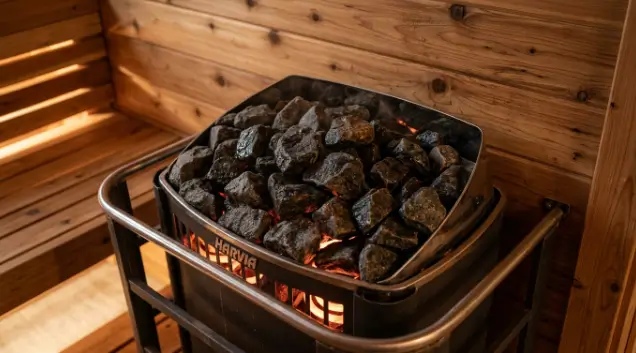
A small sauna heater works fine through a cold winter, but the cabin around it has to do more of the job. Expect preheat times to run 15 to 25 minutes longer at freezing outdoor temperatures than in mild weather, and expect a 6kW heater to comfortably cover somewhat less cubic footage once cold-soak and wind exposure are factored in. The difference between a cabin that performs well in January and one that struggles usually comes down to insulation and door seal quality, not the heater’s rated output.
How Does Outdoor Temperature Change Preheat Time?
A cabin that reaches 175 degrees Fahrenheit in 30 minutes on a mild fall evening can take closer to 45 to 55 minutes on a night below freezing, because the wood shell, benches, and stones all start from a colder baseline and absorb more heat before the air temperature climbs. This isn’t a defect, it’s just physics working against a smaller heater in a colder starting point. Cabin owners in cold climates often build the extra preheat time into their routine, starting the heater when they leave for the day’s last errand rather than right before stepping in.
Insulated Cabin vs. Basic Shed Enclosure: Which Holds Heat Better?
A properly insulated cedar or spruce cabin with a vapor barrier behind the interior paneling holds heat dramatically better through winter than a bare-wall enclosure or an uninsulated garden shed retrofit. The gap shows up most in how fast the space cools once the heater cycles off and in how hard the heater has to work to recover that loss. A basic shed conversion without insulation can lose enough heat through the walls that a 6kW unit spends most of a session running at full output just to hold temperature, shortening the heater’s working life over a full winter of use. Adding rigid foam insulation behind the interior wood, even in a small retrofit, changes this equation more than swapping to a bigger heater does.


Does a Small Sauna Need a Bigger Heater in Cold Climates?
Sizing up is one option, but it isn’t always the right one. A 6kW heater rated for roughly 300 cubic feet in a mild climate may only comfortably manage 220 to 260 cubic feet once winter conditions are accounted for, according to sizing guidance many manufacturers publish for cold-climate installs. Rather than jumping to a 9kW unit for a cabin that’s borderline in summer, tightening the door seal, adding an extra inch of insulation, and confirming the vapor barrier is intact usually closes most of the gap for less money and less electrical work than upsizing the heater itself.
What Changes About Electrical Load in Winter?
A heater that cycles more often to hold temperature against cold ambient air draws power more consistently across a session rather than reaching temperature and idling. This doesn’t typically require different wiring, since the circuit is already sized to the heater’s maximum draw regardless of season, but it does mean the electric bill reflects more actual run time per session in winter than in summer. Homes on a shared panel with other high-draw appliances should confirm the dedicated sauna circuit isn’t sharing capacity that gets tighter in winter when heating systems elsewhere in the house are also drawing more.
What Maintenance Differs in Freezing Weather?
The main cold-weather task is protecting anything holding water. A cabin with a plumbed shower or a nearby cold plunge needs its lines drained or heat-traced before hard freezes, since standing water in exposed piping is the most common winter failure point in an outdoor wellness setup. The heater and stones themselves generally tolerate cold ambient air between sessions without special care, but a cover over an outdoor unit’s electrical connections is worth checking each fall before the first real freeze arrives.
What Does the Research Say About Regular Sauna Use?
The health case for regular sauna use is built mostly on Finnish cohort data, and it holds up reasonably well as an association, not a cure. A large cohort study found men who used a sauna four to seven times weekly had lower rates of fatal cardiovascular events than men who used one once weekly, a relationship that persisted after adjusting for other risk factors. A study in the American Journal of Physiology examined how heat and cold exposure affect the body more broadly, relevant to anyone using a sauna consistently through a cold winter. None of this proves a sauna prevents illness in any one person, and anyone with a cardiovascular condition should treat regular winter sauna use as a topic worth discussing with a doctor rather than a guaranteed benefit.
What Should Buyers in Cold Climates Compare Before Ordering?
Someone shopping for a cold-climate install should look past the base kilowatt rating and check what the manufacturer actually recommends for cubic footage in a cold-weather scenario, since not every listing separates that from the mild-climate number. It’s also worth checking whether the door and window package quoted with a cabin includes double-pane glass, since single-pane glazing loses heat fast in freezing wind and can undercut an otherwise well-sized heater. Buyers replacing an older heater rather than starting fresh should also compare the new unit’s amperage draw against the existing circuit, since older installs sometimes predate current sizing guidance and may need an upgrade regardless of which heater goes in.
Buyers weighing whether to size up for a cold climate can compare published clearance and coverage numbers across models before deciding. Several specialty sellers, including SweatDecks’ lineup, list amperage and coverage specs by package, which is the fastest way to confirm a 6kW unit will actually hold up once winter cold-soak is part of the math.
Frequently Asked Questions
Does a sauna heater take longer to warm up in winter? Yes. A cabin sitting at 20 degrees Fahrenheit ambient can take 15 to 25 minutes longer to reach operating temperature than the same cabin at 50 degrees, depending on insulation quality and overnight cold-soak.
Should a small sauna in a cold climate use a bigger heater? Not necessarily. A 6kW heater rated for 300 cubic feet in a mild climate may only comfortably manage 220 to 260 cubic feet in winter conditions. Improving insulation and door seals often closes the gap for less than upsizing the heater.
Does cold weather increase the electric bill for a sauna? Yes, from longer preheat cycles and more frequent cycling to hold temperature. The increase is usually modest but real, and worth budgeting for in a winter routine.
Can a sauna heater sit in an unheated shed all winter? Most electric heaters are rated for unheated spaces between sessions, but standing water in nearby plumbing should be drained or protected before hard freezes.
References
- Does the Combination of Finnish Sauna Bathing and Other Lifestyle Factors Confer Additional Health Benefits? A Review of the Evidence, Mayo Clinic Proceedings, 2023
- Effects of heat and cold on health, with special reference to Finnish sauna bathing, American Journal of Physiology – Regulatory, Integrative and Comparative Physiology, 2018
- Cardiovascular and Other Health Benefits of Sauna Bathing: A Review of the Evidence, Mayo Clinic Proceedings, 2018
By Owen Whitfield