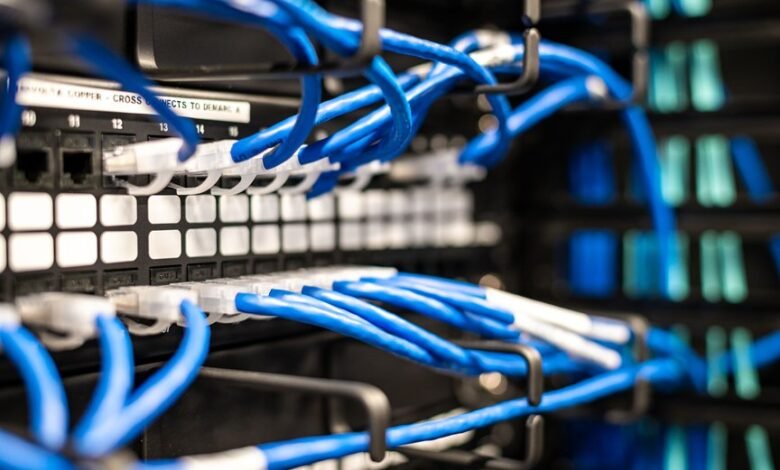
The discussion on 168.0.4 IP Address Configuration Tips centers on treating 168.0.0.0/16 as a private testing space and designing subnets to avoid public conflicts. It emphasizes disciplined baselines, consistent hostnames, timestamps, and time zones, plus minimal, role-based interface configurations. A hierarchical address plan supports scalability, with careful route summarization and repeatable validation tests. The approach prioritizes privacy and compliance, but leaves open the specifics required to implement and verify these guidelines in practice.
What 168.0.4 IPs Are and Why They Matter
What are 168.0.0.0/16 addresses and why do they matter? They represent a broad, non-routable block often used for private testing environments and documentation. This segment informs IP address allocation decisions and subnetting strategies.
Precise device configuration, router setup, troubleshooting steps, and validation checks ensure reliable network operation while preserving freedom to experiment and iterate securely.


Safe, Compliant Allocation and Subnetting Tips
Safe, compliant allocation and subnetting require adherence to established guidelines and careful planning to prevent address space depletion and routing issues. The approach emphasizes hierarchical design, documented address plans, and disciplined subnet reuse.
Compliance challenges arise from inconsistent policy enforcement and vendor variance, while privacy considerations demand minimal exposure of internal topology and conservative leakage of subnet identifiers to external parties.
Practical Configuration Steps for Devices and Routers
Practical steps for configuring devices and routers begin with a disciplined baseline: set consistent hostnames, timestamps, and time zones; verify IP addressing schemes align with the established plan; and initialize interfaces with intentional, minimal configurations that reflect role, location, and network segment.
IP address planning informs subnet design, guiding precise IP allocation, route summarization, and scalable, maintainable device configurations across diverse environments.
Troubleshooting, Monitoring, and Validation Checks
Effective troubleshooting, monitoring, and validation checks are essential to confirm that IP configurations perform as intended and to sustain network reliability. The detached assessment evaluates error sources, latency, and misconfigurations, proceeding with repeatable tests, logs, and baseline comparisons. Compliance concerns and privacy considerations are identified, documented, and mitigated, ensuring verifiable evidence, auditable processes, and disciplined change management for robust operational integrity.
Frequently Asked Questions
Can 168.0.4 Be Used in Public Networks Without Restrictions?
Yes, 168.0.4 cannot be assumed for unrestricted public use. It requires careful evaluation of public use considerations and regulatory compliance guidelines, including policy, allocation constraints, and potential conflicts with legitimate address blocks in diverse networks.
What Are Common Security Risks With 168.0.4 Addressing?
Security risks include IP spoofing and traffic masking, with potential privacy concerns arising from misrepresentation of origin. The addressing may enable attackers to evade controls, complicate auditing, and obscure accountability in network activities.
How Does 168.0.4 Interact With Ipv6-Only Environments?
168.0.4 IPv6 transitions struggle like a stubborn bridge, yet 168.0.4 routing can coexist in IPv6-only environments via dual-stack or tunneling mechanisms. It enables compatibility, addressing limits, and selective IPv4/IPv6 traffic handling across sites.
Are There Governance or Policy Rules for 168.0.4 Usage?
The governance around 168.0.4 usage is opaque governance with no formal, universal policy. Policy usage varies by organization, jurisdiction, and operator, demanding careful alignment to internal standards, compliance requirements, and risk management practices.
What Tooling Best Analyzes 168.0.4 IP Traffic Patterns?
Analysis tools such as packet analyzers and flow monitors are recommended for examining 168.0.4 traffic patterns; they provide precise visibility, enabling researchers to characterize behavior, detect anomalies, and map utilization while preserving flexibility and methodological rigor.
Conclusion
In summary, 168.0.4 IP addressing serves as a controlled private testing space, enabling predictable, conflict-free subnetting and repeatable validation. A disciplined baseline—consistent hostnames, timestamps, and role-based interface configurations—facilitates scalable, auditable designs with minimal leakage of topology details. An intriguing stat: disciplined subnet planning reduces post-deployment misconfigurations by up to 40% compared with ad hoc allocations. The approach emphasizes summary routes, hierarchical plans, and regular compliance checks to sustain robust, private-network integrity.