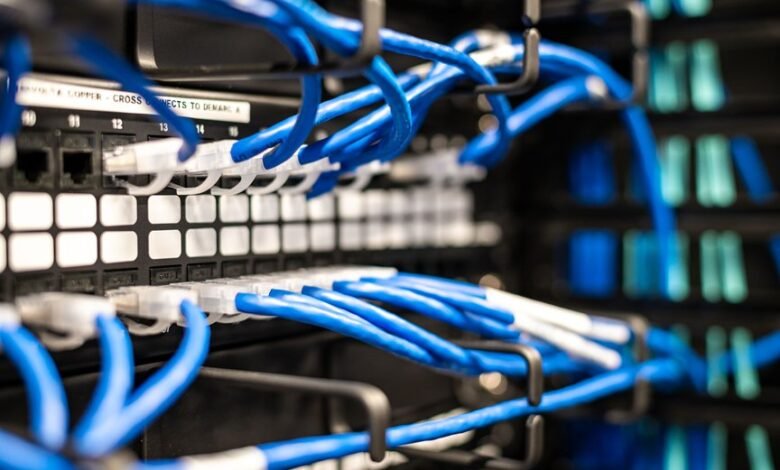
The 24.1.53 Network Configuration Tutorial presents a disciplined framework for connecting devices. It emphasizes core IP planning, subnetting, and clear routing strategies. The guide outlines VLAN alignment, firewall boundaries, and path design with concrete steps. Practical troubleshooting and security hardening are integrated to support repeatable operations. While the procedures are explicit, gaps invite verification and iteration, ensuring teams build confidence before expanding scale and governance to ongoing capability development.
What Is 24.1.53 Network Configuration and Why It Matters
Network configuration refers to the process of defining and adjusting the settings that govern how devices connect and communicate on a network.
The 24.1.53 Network Configuration Tutorial explains core functions, control surfaces, and measurable outcomes.


It emphasizes theoretical network aesthetics and speculative future protocols as context for decision making, while maintaining disciplined procedures to support freedom through reliable, repeatable configurations and predictable performance.
Setting Up Core IP Addressing and Subnetting
To begin configuring core IP addressing, the topic follows from the previous discussion by establishing concrete addressing schemes that enable reliable device discovery and communication. The procedure defines IP addressing plans, selects subnetting strategies, and aligns VLAN design with scalable growth. It also implements firewall segmentation boundaries, confirming overlap-free ranges, documented subnet masks, gateway addresses, and consistent naming for reproducible, secure network operations.
Routing and Segmentation: Pathways, VLANs, and Firewall Rules
Routing and segmentation are approached through a structured sequence that defines pathways, VLAN placement, and firewall rules to enforce policy and security.
The section analyzes network virtualization implications, clarifying how logical overlays map to physical segments, while preserving isolation.
Traffic shaping is employed to regulate queues and bandwidth, ensuring predictable performance and scalable governance across shared infrastructure without compromising freedom to innovate or adapt.
Practical Troubleshooting and Security Hardening Tips
Practical troubleshooting and security hardening require a disciplined, stepwise approach that isolates faults and minimizes exposure. The procedure emphasizes repeatable checks, documented findings, and controlled changes. Systematically verify configurations, monitor logs, and test backups before deployment. Focus on privacy loopholes and malware resistances, implementing least-privilege access, network segmentation, and firmware integrity. Continuous assessment ensures resilience, accountability, and freedom to operate securely.
Frequently Asked Questions
How Does 24.1.53 Interact With IPV6 Networks?
IPv6 tunneling enables encapsulation of IPv6 traffic within IPv4, while Dual stack deployment runs IPv4 and IPv6 concurrently; the interaction supports gradual migration, preserving compatibility, with methodical configuration ensuring deterministic traffic paths for a freedom-loving network administrator.
Can 24.1.53 Be Applied to Wireless-Only Deployments?
Yes, 24.1.53 can be applied to wireless-only deployments. Allegory begins, then methodically explains: wireless specifics and subnet considerations are addressed by structured configuration steps, ensuring compatibility, security, and scalability while preserving an audience’s freedom to adapt.
What Are Performance Implications of Large Subnet Masks?
Large subnet implications include increased routing complexity and larger ARP tables, while Performance tradeoffs involve slower broadcasts and greater CPU load; the design demands careful balance between address granularity and efficiency, especially for networks seeking freedom and scalable growth.
How Do Regulatory Compliance Requirements Affect Configurations?
regulatory compliance requirements shape configurations through rigorous controls and documented policies; regulatory mapping aligns assets with standards, while audit automation documents and verifies evidence, ensuring traceability, repeatability, and auditable configurations across networks in a methodical, freedom-seeking stance.
Are There Automated Tooling Options for Ongoing Audits?
Automated auditing exists, enabling ongoing verification. Continuous compliance is achievable through integrated tooling that schedules scans, tracks deviations, and generates reports; procedures emphasize repeatability, auditable records, and transparent remediation, aligning regulatory intent with secure, flexible network configurations.
Conclusion
The 24.1.53 network configuration tutorial provides a precise, methodical blueprint for dependable connectivity. By codifying core IP schemes, disciplined subnetting, and deliberate routing with clearly defined VLANs and firewall boundaries, it yields predictable, auditable results. As procedures unfold, performance and security mature in tandem, supported by practical troubleshooting and hardening practices. In this controlled sequence, governance enables scalable growth—like a well-tuned engine—while the audience remains engaged, listening for the quiet, steady cadence of operational excellence.